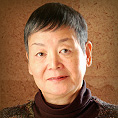
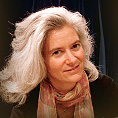
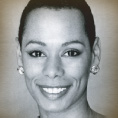
Karen Kandel (Papermaker / Dramaturg / Script Consultant) is an associate artist with Mabou Mines. Her performance awards include three Obies and Dramalogue, Connecticut Critics Circle, and Craig Noel Awards; a Helen Hayes nomination; a Drama League Outstanding Performance citation; and, most recently, the Edinburgh Festival's Herald Angel Award. Kandel has received support of her own interdisciplinary work from the Alaska Artist-in Residence / Rasmuson Foundation, the Asian Cultural Council, TCG Future Collaborations, the Peter S. Reed Foundation, the Jim Henson Foundation, and the Spencer Cherashore Fund. She is one of six American artists to receive the Audrey Skirball-Kenis T.I.M.E. Grant. Karen and Mabou Mines participated in the TCG/Fox Fellowship, William and Eva Fox Foundation. Karen is a 2008 United States Artists Ziporyn Fellow. |
|
 |
|
Shonosuke Okura (Noh Otsuzumi Drummer) is the eldest son of the late 15th-generation head of the Okura School, Chojuro Okura. With the otsuzumi, a Japanese traditional percussion instrument, he has collaborated with various well-known artists in Japan and internationally, embracing a wide range of genres and artistic forms. In the United States, he participated in the Lakota Tribe's 100th anniversary commemoration of the Wounded Knee Massacre and has also recorded with the legendary Native American flutist Carlos Nakai. He has taken part in a tea ceremony at the Temple of Dendur at the Metropolitan Museum of Modern Art in New York. He was invited to play at the Vatican Palace Concert Hall for the pope and has performed at various ceremonies and events around the world. He teaches a diverse range of students his traditional art form in international workshops. He received the Japan Cultural Design Award in 2005. |
|
 |
|
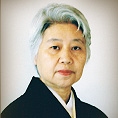
Shisui Arai (Biwa Player), born in 1947 in Yokohama into a biwa player family, studied with her father beginning at the age of six. She later studied traditional playing from Mastuda Seisui and modern Japanese playing from Kineya Masakuni. She won first place in the Japan Biwa Players Association Contest and received the Minister of Culture Award and the President of NHK (Japanese National Broadcasting Association) Award. She succeeded her father in leading his group, Jyousui kai, and has become a renowned teacher. Although biwa was originally for solo performance and singing, Shisui Arai introduced group performance and composed many pieces that have expanded the Biwa tradition. Pushing the limits of traditional performing styles, she collaborates with a wide range of artists and has performed in more than 10 countries. She was a member of Dojoji (A Forbidden Journey) produced by Kyoko Ibe, which traveled to four Scandinavian countries. She frequently collaborates with Noh master Akira Matsui and Noh drummer Shonosuke Okura. |
|
 |
|
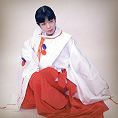
Makiko Sakurai (Fujiawa Tamiko / Shomyo Singer / Shirabyoshi Dancer) Since 1986 Makiko Sakurai has studied Shomyo, the ancient Heian period (781-1192 AD) form of chant associated with the Tendai sect of Buddhism, with teachers Genshin Nakayama and Ryoshu Kamiya. She performs in its pure unaccompanied form, and also in the context of gagaku (medieval court music). She has adapted it for contemporary settings of her own, and also in collaboration with Japanese composers, Mamoru Fujieda and Ayuo, ("The Night Chant" and "Izutsu" both released on the Tzadik label). She also performs female folk music and dance of Heian era. She has studied the Japanese bamboo flute called Ryuteki, and Javanese gamelan in Surakarta, as well as Yemenite ritual and chant in Jerusalem, and the Navajo language in New Mexico. She has been in residence at the Wurlitzer Foundation in Taos, creating music and dance with children at Taos Pueblo in 2000. Makiko Sakurai originally studied piano at Nara Temple and at Osaka University of the Arts. |
|
 |
|
Sonoko Soeda (Oshin/Translator)is from Tokyo, where she was born in 1975. For 12 years, she has been a member of the Bungaku-za Theatre Company, one of the oldest and most well-known theatre companies in Tokyo. Sonoko was an Asian Cultural Council grantee in 2008 and was in the United States for six months to research theatre in New York City. As an actor, she has performed in many productions, including Onnano Isshou, Chinmoku to Hikari, Nukegara, Kadode, and Hamlet Clone (also the German and Brazilian tours). She has translated from English Hospitality Sweet by Roger Ruef, Phaedra's Love by Sarah Kane, and, most recently, Edward Albee's The Goat; or, Who Is Sylvia? |
|
 |
|
Tadashi Tamura (Paper and Calligraphy Consultant) Tadashi Tamura has mastered the traditional Japanese papermaking and has been worked on making small sized chemical free washi. He has been continuously teaching washi making as traditional art craft to elementary school students, as well as teaching the workshops at research institutes and universities in Japan and overseas. |
|
 |
|
Cody Chen (Production Stage Manager) has collaborated with Armitage Gone! Dance, Alonzo King LINES Ballet, Mark Morris Dance Group, Bebe Miller Company, Trisha Brown Dance Company, Parsons Dance, Philadanco, Elisa Monte Dance, Dance Heginbotham, José Limón Dance Company, Helen Simoneau Danse, Jin Xing Dance Theatre Shanghai, TAO Dance Theater, TheatreWorks (Singapore), LA Theatre Works, and Manhattan School of Music Opera, amongst others. In addition, Mr. Chen tours to International venues including the National Center for the Performing Arts (China), National Theatre of Taiwan (Taiwan), The Joyce Theatre (US), Esplanade - Theatres on the Bay (Singapore), Israeli Opera House (Israel), Théâtre National de Chaillot (France), Bonn Opernhaus (Germany), Ravenna Festival (Italy), Teatro Alfa (Brazil), Palacio de Bellas Artes (Mexico) and Mariinsky Theatre (Russia). Cody is currently the Production Manager for the Children's Theater of Minneapolis. |
|
 |
|
Nicole Pearce (Lighting Design) Selected NY credits includes work with directors: Edward Albee, Leigh Silverman, Trip Cullman, Pam MacKinnon, Jade King Carroll, Margot Bordelon, Chay Yew, & Ed Sylvanus Iskandar. With companies including The Cherry Lane, The Play Company, Ma-Yi, Ripetime, The Playwrights Realm, & Labryinth Theater Company. Regionally: Williamstown Theatre Festival, Two River Theater, Long Wharf, Hartford Stage & Philadelphia Theater Company. Work with choreographers Mark Morris, Aszure Barton, Robert Battle, Jessica Lang, John Heginbotham and Andrea Miller; Netherlands Dance Theater; Introdans; Brimingham Royal Ballet; The National Ballet of Japan; Boston Ballet; Mark Morris Dance Group; The Joffrey Ballet; Alvin Ailey American Dance Theater; & American Ballet Theater. www.nicolepearcedesign.com |
|
 |
|
KellyAnne Hanrahan (Website Design) www.koolass.com. An alumnus of the School of the Art Institute of Chicago, since 1997 KellyAnne Hanrahan has formed a career in illustration, graphic design, and painting. She currently works producing performance promotions on and off Broadway. Projects include working with Bond Theatrical (Broadway tour marketing agency) and theaters such as Jujamcyn Theaters. She is also a painter (paintingsofanimals.com) and has exhibited in the US and Kyoto, Japan. |
|
Claire Cuccio (Translator & Literary Advisor) Claire Cuccio is an independent scholar in Japanese modern literature and the visual arts currently based in Kansai, Japan. She has collaborated on projects with BankART 1929 Yokohama, InSEA (International Society for the Education through Art), among other organizations and individuals committed to intercultural visual arts publications and programming. At present, she is an adjunct professor at Kyoto Consortium for Japanese Studies and is working on a project examining the intersection of contemporary woodblock print artisans, popular literature on ukiyo-e and Japanese cultural policy.
Atsumi Murata (Paper and Calligraphy Consultant) Born in Tokyo. Graduated from Junior College of Art and Design of Musashino Art University. Besides working on traditional Japanese calligraphy, Atsumi has been working on art pieces which is made by her original method, combining Sumi ink into washi. She had group and solo exhibitions in Tokyo, New York, Egypt and Paris.
Motoaki Fujimoto (Paper and Calligraphy Consultant) Modern archival documents researcher. |
|